
Introduction: Evolution of IoT Labs in Bihar’s Schools
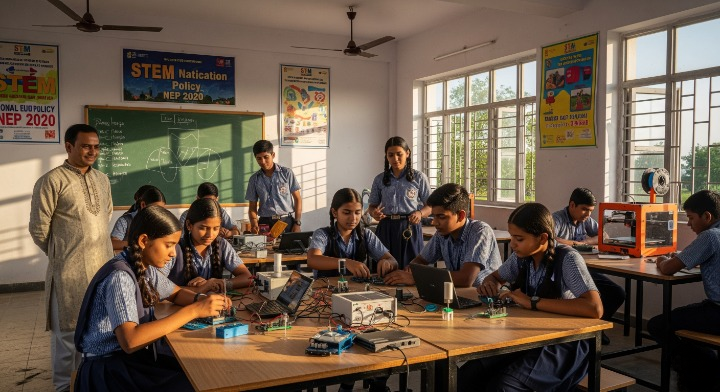
The emergence of IoT Labs in Bihar’s K-12 Education signals a departure from conventional teaching methods. In the mid-2010s, urban schools in Patna began introducing basic sensor kits, but the real breakthrough came with the Atal Innovation Mission’s Atal Tinkering Labs (ATLs). By 2025, hundreds of ATLs have been set up across Bihar’s rural and urban schools, featuring IoT kits, sensors, and 3D printers, influencing thousands of students. These labs promote hands-on learning, encouraging students to tackle local issues like water scarcity and agricultural inefficiencies.
This progress aligns with the National Education Policy (NEP) 2020, which prioritizes experiential STEM education in K-12 Education. Despite historical educational disparities, Bihar is using NEP 2020 to integrate IoT Labs, supporting India’s digital and self-reliant goals. Initiatives like the Schools2030 Growth Labs in districts such as Muzaffarpur and Patna are narrowing gaps, enhancing Education in India’s inclusivity. Collaborations with private entities and EdTech companies are also ensuring Bihar’s students are prepared for a technology-driven future.
Why IoT Labs Matter for Bihar’s K-12 Learners
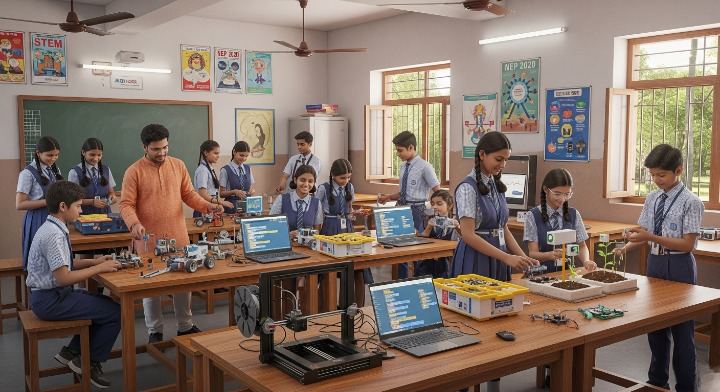
In a state where 80% of the population relies on agriculture, IoT Labs are crucial for readying Bihar’s youth for emerging sectors. These labs foster 21st-century skills—problem-solving, creativity, and collaboration—vital in a world where AI and automation jobs are projected to grow by 40% by 2030. Students in Bihar’s K-12 Education build smart irrigation systems and weather stations, addressing local demands directly.
Globally, nations like Japan and South Korea embed coding and IoT early, and Bihar is following suit. IoT Labs provide a competitive advantage in STEM, preparing students for careers in smart agriculture and healthcare technology—key to Bihar’s economy. They also promote inclusivity, empowering girls and underserved students. Research indicates a 20-30% boost in logical thinking among students engaged with IoT, helping reduce dropout rates in Bihar’s secondary schools, where retention is a concern. In Education in India, these labs make learning dynamic and pertinent.
Overview of Key Initiatives and Trends in Bihar
Bihar is experiencing a wave of efforts to incorporate IoT Labs into K-12 Education. Atal Tinkering Labs are at the forefront, equipping hundreds of schools to drive innovation. Students have created solutions like affordable water filters and drone prototypes, displayed at Makers’ Melas organized by Kilkari Bal Bhawan, fostering teamwork and entrepreneurial spirit crucial for Education in India.
The Schools2030 Growth Labs, launched in 2023 across Muzaffarpur, Samastipur, Bhojpur, Patna, and Saran, support 17 schools with hands-on STEM setups, including IoT Labs. EdTech partners like STEMROBO and BotsVidya provide tailored IoT and AI labs for K-12 Education, merging virtual and physical learning. Private collaborators, such as 4BitLabs, offer workshops and kits, while CBSE schools in Bihar include IoT as electives, aligning with NEP 2020. Trends highlight the growth of hybrid models, combining online coding with physical IoT Labs, enhancing accessibility in Education in India.
Table: Key IoT Initiatives in Bihar
| Initiative | Focus Areas | Reach | Impact |
| Atal Tinkering Labs | IoT, Robotics, 3D Printing | Hundreds of schools | Thousands of students innovate locally |
| Schools2030 Growth Labs | Hands-on STEM education | 17 schools in 5 districts | Enhances problem-solving skills |
| EdTech Partnerships (e.g., STEMROBO) | IoT, AI, and robotics kits | Urban & rural schools | Offers scalable, interactive learning |
| Makers’ Melas | Project showcases, teamwork | Statewide events | Builds scientific curiosity |
What an IoT Lab Includes in Bihar
Bihar’s IoT Labs are crafted for practical, community-oriented learning. They feature microcontrollers like Arduino and Raspberry Pi for device programming. Sensors (temperature, moisture, ultrasonic) and actuators (motors, LEDs) enable projects like smart farming tools. Beginner-friendly kits like Quarky and LEGO Mindstorms, along with 3D printers for prototyping, are staples.
IoT Labs focus on connectivity, utilizing Wi-Fi modules and cloud platforms for projects such as air quality monitors. Students code in Python or Scratch, gaining AI fundamentals through real-world tasks. For instance, a Patna school developed an IoT-based flood alert system, addressing Bihar’s frequent floods. These labs integrate theory and practice, making K-12 Education in Bihar innovative and relevant to Education in India.
Table: Typical Equipment in Bihar’s IoT Labs
| Category | Examples | Purpose |
| Microcontrollers | Arduino, Raspberry Pi | Programming hub for projects |
| Sensors | Moisture, Temperature, Motion | Data collection for IoT solutions |
| IoT Kits | Quarky, LEGO Mindstorms | Building accessible IoT devices |
| Tools | 3D Printers, Soldering Kits | Prototyping and assembly |
| Software | Scratch, Python IDE | Coding and IoT simulation |
Step-by-Step Guide: Setting Up Low-Cost IoT Labs in Bihar
Establishing IoT Labs in Bihar’s resource-limited schools is achievable with careful planning. A basic lab costs ₹50,000-₹1 lakh, with 40% for hardware (kits under ₹5,000), 25% for software/training, and the rest for infrastructure and maintenance.
Steps to Set Up
- Assess Needs: Survey schools to prioritize equipment for local issues (e.g., IoT kits for agriculture).
- Design Space: A 200 sq ft room with basic power backup suits 30 students.
- Procure Kits: Acquire 10-15 affordable kits from local vendors or ATL grants.
- Train Teachers: Leverage free online courses or CBSE’s STEM programs.
- Ensure Sustainability: Collaborate with NGOs like Kilkari for ongoing support and curriculum integration.
DIY approaches, such as using recycled materials for device frames, work for rural schools. Mobile “labs on wheels” extend IoT Labs to remote areas, ensuring access. These low-cost models sustain Bihar’s K-12 Education and contribute to Education in India.
Table: Budget Breakdown for a Low-Cost IoT Lab in Bihar
| Item | Estimated Cost (₹) | Percentage |
| Hardware (Kits & Sensors) | 20,000-30,000 | 40% |
| Software & Training | 10,000-15,000 | 25% |
| Infrastructure (Tables, Power) | 10,000-15,000 | 20% |
| Maintenance & Upgrades | 5,000-10,000 | 15% |
Rural and Budget Schools in Bihar: Bridging the Digital Divide
Rural schools in Bihar face hurdles—limited electricity, untrained staff, and high costs—impeding IoT Labs. Innovative solutions, however, are bridging this divide. Mobile STEM vans bring kits to villages, while ATLs in rural settings enable students to create solutions like solar-powered devices.
Success stories stand out: In Samastipur, students built a low-cost water purifier with ATL resources. NGOs like Robotex India have trained thousands in rural Bihar to develop IoT devices. These efforts harness community support and affordable technology, making K-12 Education in Bihar inclusive and impactful for Education in India.
Training and Empowering Teachers in Bihar
Teachers are pivotal for IoT Labs’ success. Bihar’s “train-the-trainer” initiatives, such as those by Schools2030, upskill educators in coding and IoT. CBSE’s AI handbooks assist teachers in Patna and Bhojpur, with online platforms providing remote training.
Inspiring tales emerge: A Muzaffarpur teacher, trained in IoT, now guides students in building drones, revolutionizing her school’s STEM culture. State networks, like Bihar’s education department, embed training into teacher growth, ensuring sustainability in K-12 Education.
Success Stories: Beyond Bihar’s Urban Centers
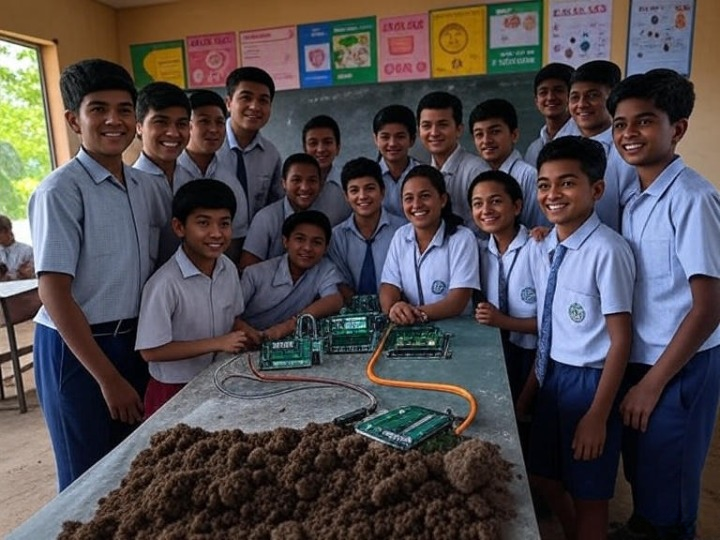
In Bihar’s tier-2 cities and villages, IoT Labs are making waves. In Saran, students crafted an IoT-based soil moisture sensor, benefiting local farmers. A Bhojpur teacher remarked, “My students now aspire to be engineers,” reflecting a mindset shift. Measurable outcomes include 25% higher STEM scores and reduced dropouts. These narratives highlight how IoT Labs drive practical results in Education in India.
Overcoming Challenges & Recommendations in Bihar
Challenges persist: infrastructure deficits, teacher shortages, and uneven funding hinder IoT Labs. Rural schools often lack consistent power, and initial costs pose barriers.
Recommendations
- Expand ATL grants to reach more rural schools.
- Mandate IoT training for teachers through state programs.
- Partner with EdTech firms for affordable kits and virtual labs.
Future trends include AI-driven personalized learning and IoT for smart agriculture, customized for Bihar’s needs. These advancements will strengthen K-12 Education in Bihar, setting a benchmark for Education in India.
Conclusion: IoT Labs as Catalysts for Bihar’s Future-Ready Education
IoT Labs are transforming K-12 Education in Bihar, aligning with NEP 2020 to prepare students for a tech-driven world. By fostering innovation and inclusivity, they empower Bihar’s youth to address local issues and compete globally. The future demands expanded access, teacher training, and adoption of AI and IoT trends. With sustained investment, Bihar can lead Education in India, ensuring every child, from Patna to remote villages, has the tools to innovate and succeed.