
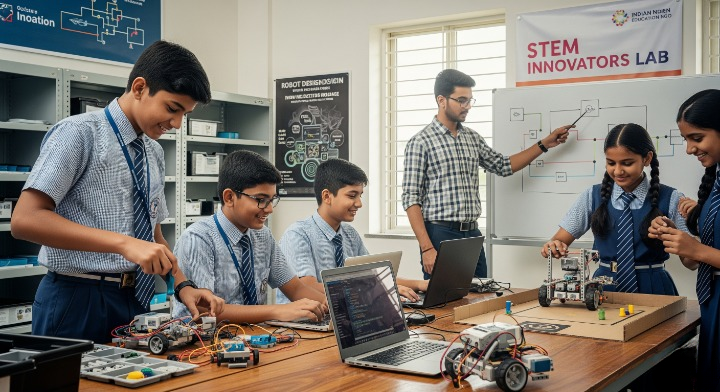
Introduction: The STEM Engagement Challenge
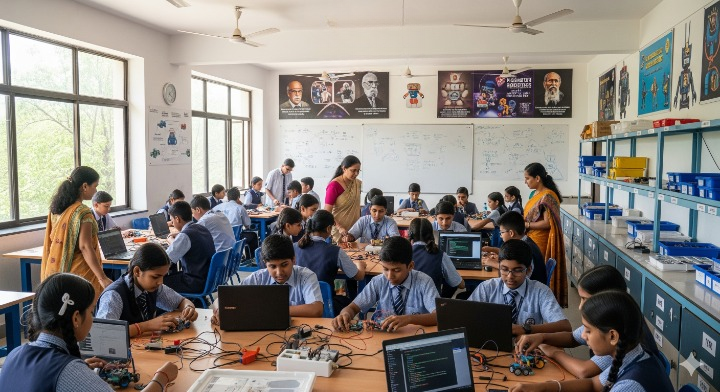
STEM (Science, Technology, Engineering, and Mathematics) education is the backbone of innovation, yet schools worldwide face a common challenge: keeping students engaged. Abstract concepts like force, motion, or algorithms often feel disconnected from real life, leading to disinterest. In India, where rote learning has historically dominated, the need for interactive classroom activities is more pressing than ever.
Robotics labs for schools offer a solution by blending theory with hands-on practice. Students don’t just learn about circuits—they build them. They don’t just study coding—they program robots to navigate obstacles. This practical approach makes STEM learning with robotics engaging, relevant, and fun, addressing the engagement gap head-on.
Why Robotics Labs Matter for Schools
Robotics labs bridge the gap between theoretical knowledge and practical application, making them a vital tool for modern education. Here’s why they matter:
- Enhanced Engagement: Building and programming robots captivates students’ attention, turning passive learners into active creators.
- Real-World Relevance: Robotics connects STEM concepts to real-world applications, like designing drones or automated systems.
- Skill Development: Students develop critical skills like problem-solving, critical thinking, and teamwork through school robotics programs.
- Future-Ready Workforce: With automation and AI shaping industries, robotics labs prepare students for careers in technology.
By fostering hands-on science experiments, robotics labs make learning experiential, encouraging students to explore, fail, and innovate.
What Is a School Robotics Lab?
A school robotics lab is a dedicated space equipped with tools, materials, and technology for students to design, build, and program robots. Unlike traditional classrooms, these labs prioritize interactive classroom activities, allowing students to experiment with hardware (like sensors and motors) and software (like coding platforms).
Key Features of a Robotics Lab
| Component | Description |
| Hardware Kits | Modular robotics kits (e.g., LEGO Mindstorms, Arduino) for building robots. |
| Software Tools | Coding platforms like Scratch, Python, or Blockly for programming robots. |
| Workstations | Dedicated spaces with computers, tools, and materials for collaborative work. |
| Curriculum | Structured lessons aligning with STEM subjects and national education standards. |
These labs create an ecosystem where students can engage in STEM learning with robotics, fostering creativity and technical skills.
Core Components of a Robotics Lab Program
A successful school robotics program requires careful planning. Below are the essential components:
- Robotics Kits: Choose beginner-friendly kits like VEX Robotics or Raspberry Pi for younger students and advanced options like Arduino for older ones.
- Trained Educators: Teachers need training to guide students in robotics and coding, ensuring effective facilitation.
- Curriculum Integration: Lessons should align with physics, math, and computer science curricula, making robotics a natural extension of classroom learning.
- Collaborative Projects: Group activities encourage teamwork, mirroring real-world engineering workflows.
- Safety Protocols: Ensure safe handling of tools and electronics to create a secure learning environment.
By incorporating these elements, schools can create robust robotics labs for schools that maximize educational impact.
How Robotics Labs Enhance STEM Learning
Robotics labs transform STEM education by making abstract concepts tangible. Here’s how they enhance learning:
- Physics in Action: Students learn about motion, force, and energy by building robots that move or lift objects.
- Coding Made Fun: Programming robots to perform tasks like navigating mazes makes coding engaging and approachable.
- Engineering Principles: Designing robots introduces students to mechanical and electrical engineering concepts.
- Problem-Solving Skills: Troubleshooting robot designs fosters critical thinking and resilience.
- Teamwork and Collaboration: Group projects in school robotics programs teach students to communicate and collaborate effectively.
For example, a student building a robot to pick up objects learns about weight distribution (physics), writes code to control motors (coding), and designs a stable structure (engineering)—all in one project.
Step-by-Step Guide: Setting Up a Robotics Lab
Creating a robotics lab may seem daunting, but with a clear plan, schools can establish one efficiently. Here’s a step-by-step guide:
- Assess Needs and Goals:
- Identify the age group and skill level of students.
- Define objectives (e.g., teach coding, enhance physics understanding).
- Secure Funding:
- Explore government grants, CSR funds, or partnerships with tech companies.
- Consider low-cost kits to optimize expenses.
- Choose Equipment:
- Select age-appropriate robotics kits and software.
- Ensure computers or tablets are available for coding.
- Design the Space:
- Set up workstations with ample lighting and storage.
- Include safety features like anti-slip mats and organized tool storage.
- Train Teachers:
- Provide professional development in robotics and coding.
- Partner with organizations offering teacher training programs.
- Develop Curriculum:
- Integrate robotics into existing STEM subjects.e
- Include project-based learning and competitions.
- Launch and Evaluate:
- Start with a pilot program and gather feedback.
- Scale up based on student engagement and outcomes.
This structured approach ensures robotics labs for schools are sustainable and impactful.
Budget Planning & Cost Optimization for School Robotics Labs
Budget constraints are a common challenge, especially in Indian schools. Here’s a breakdown of costs and tips for optimization:
| Item | Estimated Cost (INR) | Optimization Tips |
| Robotics Kits | 50,000–2,00,000 | Buy modular kits reusable across grades. |
| Computers/Tablets | 1,00,000–5,00,000 | Use existing computer labs or refurbished PCs. |
| Software Licenses | 0–50,000 | Opt for free platforms like Scratch or Python. |
| Teacher Training | 20,000–1,00,000 | Partner with NGOs or tech firms for free training. |
| Lab Setup (Furniture, etc.) | 50,000–2,00,000 | Repurpose existing classrooms to reduce costs. |
Cost-Saving Strategies
- Open-Source Tools: Use free software like Arduino IDE or Blockly.
- Bulk Purchases: Negotiate discounts for bulk robotics kit orders.
- Community Funding: Engage alumni or local businesses for sponsorships.
- Phased Implementation: Start with a small lab and expand gradually.
By planning strategically, schools can establish robotics labs for schools without breaking the bank.
Real Stories: Impact of Robotics Labs in Indian Schools
Across India, school robotics programs are making a difference. Here are two inspiring examples:
- Kendriya Vidyalaya, Bengaluru:
- Initiative: Introduced a robotics lab with LEGO Mindstorms in 2020.
- Impact: Student participation in STEM competitions increased by 60%, with several teams winning national awards.
- Quote: “Robotics made science fun! I never thought I could build a robot that actually works,” says Priya, a Class 8 student.
- Government School, Rajasthan:
- Initiative: Partnered with a local NGO to set up a low-cost robotics lab using Arduino kits.
- Impact: Improved student attendance by 20% and boosted interest in STEM careers.
- Quote: “Our students now dream of becoming engineers,” shares teacher Anil Sharma.
These stories highlight how STEM learning with robotics transforms education, even in resource-constrained settings.
Overcoming Implementation Challenges: Solutions for Diverse Indian Schools
India’s diverse educational landscape presents unique challenges. Here’s how schools can address them:
| Challenge | Solution |
| Limited Funding | Seek CSR funds or government grants like Atal Tinkering Labs (ATL). |
| Lack of Trained Teachers | Partner with organizations offering free or subsidized training programs. |
| Infrastructure Constraints | Use portable robotics kits and repurpose existing spaces. |
| Curriculum Integration | Align projects with CBSE/ICSE syllabi for seamless adoption. |
| Student Access in Rural Areas | Introduce mobile robotics labs to reach remote schools. |
By addressing these challenges, schools can ensure robotics labs for schools are inclusive and accessible.
Future Trends: AI, IoT, and Sustainability in Robotics Education
The future of school robotics programs is exciting, with emerging technologies enhancing their potential:
- Artificial Intelligence (AI): Robots integrated with AI can teach students about machine learning, like programming a robot to recognize objects.
- Internet of Things (IoT): IoT-enabled robots allow students to explore connected devices, such as smart home systems.
- Sustainability: Projects like building solar-powered robots teach students about renewable energy and environmental responsibility.
These trends ensure STEM learning with robotics remains relevant, preparing students for Industry 4.0 careers.
Aligning Robotics Labs with NEP 2020 and National Standards
India’s National Education Policy (NEP) 2020 emphasizes experiential learning, making robotics labs for schools a perfect fit. Here’s how they align:
- Experiential Learning: Robotics labs promote hands-on learning, aligning with NEP’s focus on practical education.
- Skill Development: NEP prioritizes 21st-century skills like critical thinking and collaboration, which robotics fosters.
- Interdisciplinary Approach: Robotics integrates science, math, and technology, supporting NEP’s holistic education goals.
- Inclusivity: Labs can be adapted for diverse learners, aligning with NEP’s inclusivity mandate.
By aligning with NEP 2020, schools can secure government support and ensure curriculum relevance.
Building Community Partnerships & After-School Extensions
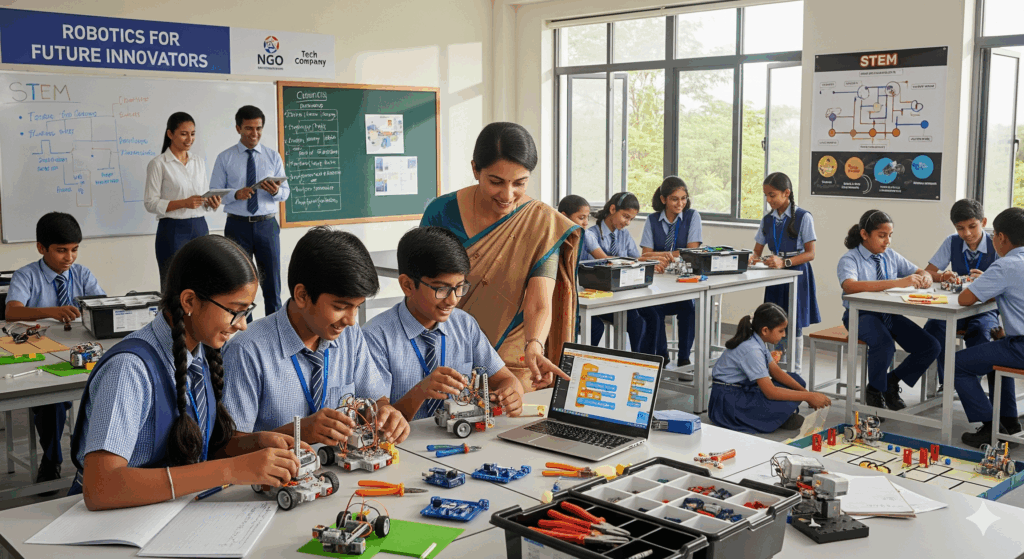
Community involvement amplifies the impact of school robotics programs. Here’s how to build partnerships:
- Corporate Sponsorships: Partner with tech companies like Infosys or Tata for funding and mentorship.
- NGO Collaborations: Organizations like STEM Learning Pvt. Ltd. provide resources and training.
- After-School Programs: Offer robotics clubs or workshops to extend learning beyond school hours.
- Competitions: Host or participate in events like FIRST Robotics or World Robot Olympiad to engage the community.
These partnerships make robotics labs for schools sustainable and community-driven.
Success Stories: Impactful School Robotics Programs
Beyond India, global examples showcase the power of robotics labs:
- Singapore’s Robotics Curriculum:
- Integrated robotics into primary school curricula, boosting STEM enrollment by 30%.
- Students design robots for community challenges, like waste management.
- USA’s FIRST Robotics Competition:
- Engages high school students in building competitive robots, fostering teamwork and innovation.
- Over 500,000 students participate annually, with many pursuing STEM careers.
These success stories inspire Indian schools to adopt STEM learning with robotics for transformative outcomes.
Frequently Asked Questions
1. What is the minimum age for students to start robotics?
Students as young as 6 can begin with simple kits like LEGO WeDo, while older students can use advanced platforms like Arduino.
2. How much does a robotics lab cost?
Costs range from ₹50,000 for basic setups to ₹5,00,000 for advanced labs. Budget optimization strategies can reduce expenses.
3. Do teachers need prior experience?
No, but training programs can equip teachers with the necessary skills.
4. How do robotics labs align with school curricula?
They integrate with physics, math, and computer science, enhancing existing syllabi.
5. Can rural schools afford robotics labs?
Yes, with low-cost kits and partnerships, rural schools can implement effective programs.
Conclusion: Preparing Students for the Future
Robotics labs for schools are more than just classrooms—they’re gateways to the future. By fostering STEM learning with robotics, schools empower students to think critically, collaborate effectively, and innovate boldly. From urban Kendriya Vidyalayas to rural government schools, robotics labs are leveling the playing field, making STEM accessible and exciting.As India strides toward a tech-driven future, investing in school robotics programs is an investment in its youth. By embracing hands-on science experiments and interactive classroom activities, schools can prepare students for a world where technology reigns supreme. Start small, think big, and watch your students build the future—one robot at a time.