
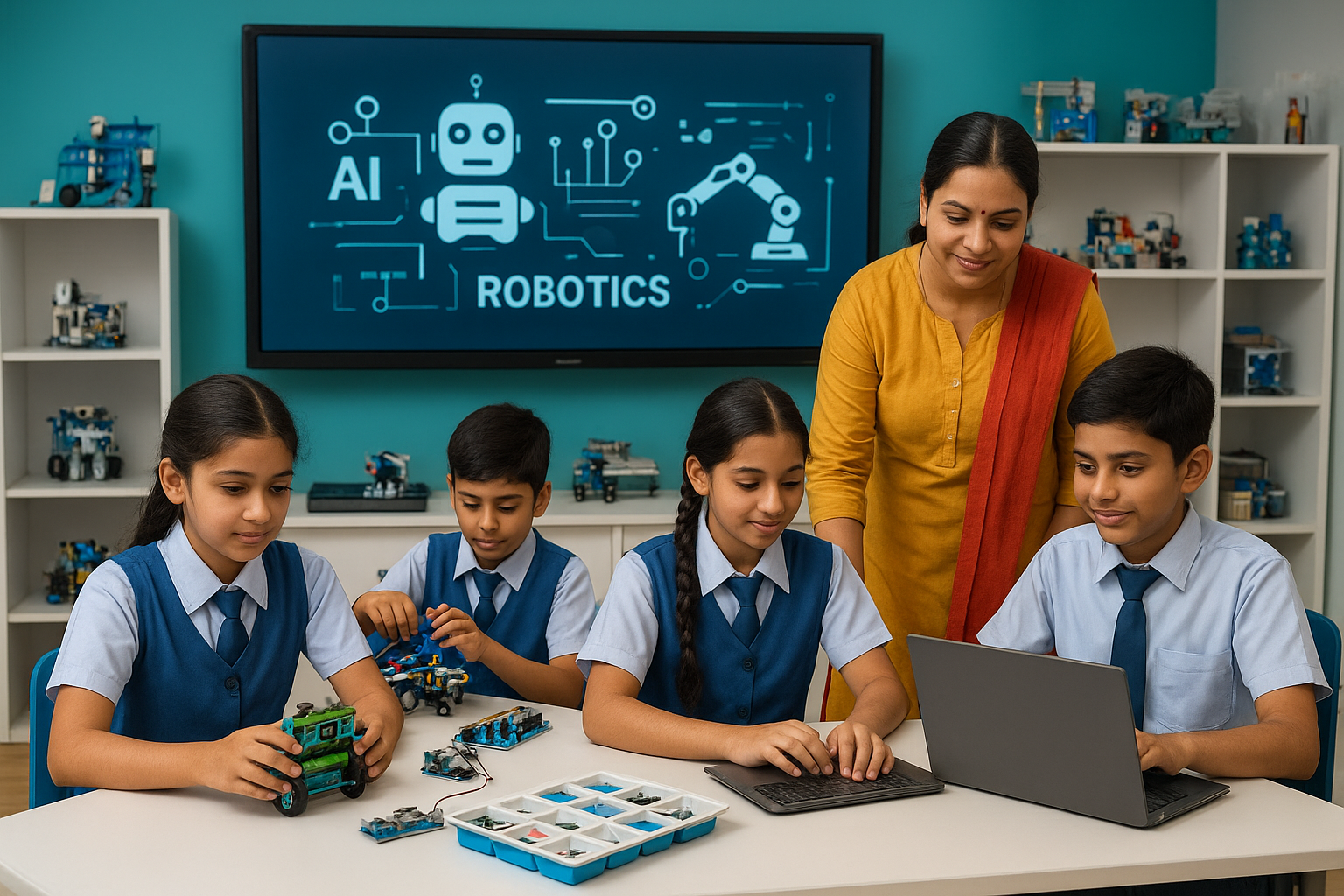
What is a Robotics Lab in School?
A Robotics Lab in School is a specialized learning space where students use robotics kits, coding platforms, IoT sensors, and AI tools to build and test robots. Unlike traditional methods where students memorize theories, Robotics Labs in Schools encourage hands-on learning.
These labs combine subjects like STEM (Science, Technology, Engineering, and Mathematics) with creativity and problem-solving. For example:
- A robot that measures soil moisture connects to science.
- Coding its movement involves mathematics and programming.
- Designing its structure requires engineering and creativity.
By integrating robotics into education, Robotics Labs in Schools make learning exciting, relevant, and deeply impactful.
Why Schools Need Robotics Labs in 2025 and Beyond
The demand for Robotics Labs in Schools has never been greater. They provide:
- Bridging theory with practice – Students apply classroom knowledge to real projects.
- Future career preparation – With careers in AI, IoT, and robotics booming, school robotics labs prepare students early.
- Boosting student engagement – Hands-on robotics makes learning feel like exploration.
- Encouraging innovation – Robotics Labs in Schools help students see themselves as problem-solvers.
💡 According to research, students involved in Robotics Labs in Schools show higher STEM achievement scores and a stronger interest in pursuing technology-related careers.
Key Benefits of Robotics Labs for Students

1. Develops Critical Thinking
Every robotics task is a problem to solve. Students must analyze, test, and refine solutions—building strong logical and analytical skills.
2. Improves Teamwork and Leadership
Working in groups teaches students how to communicate, divide responsibilities, and lead projects—mirroring real workplaces.
3. Sparks Creativity and Innovation
Robotics isn’t just technical—it’s also artistic and imaginative. Students design robots with unique features, blending creativity with science.
4. Builds Confidence and Resilience
When a project succeeds after trial and error, students gain confidence. They also learn the value of persistence and turning failures into lessons.
5. Provides Future-Ready Skills
From coding in Python to working with Arduino boards, robotics labs introduce students to technologies used in industries worldwide.
Real-World Examples of Student Robotics Projects
Robotics education goes beyond theory—it produces tangible outcomes. Some exciting student projects include:
- Maze-Solving Robots – Using sensors to find the quickest route.
- Smart Home Systems – Robots that control lighting or appliances.
- AI Helpers – Robots that respond to voice commands.
- Environmental Monitoring Bots – Machines that test air or water quality.
These projects not only teach technical skills but also show how technology can improve lives and communities.
How to Set Up a Robotics Lab in School
A robotics lab doesn’t need to be overwhelming. Here’s a step-by-step guide:
1. Design a Scalable Curriculum
- Primary (K–5): Fun kits with visual programming (Scratch, Blockly).
- Middle (6–8): Intermediate projects with Arduino, sensors, and Python.
- High School (9–12): Advanced robotics with AI, IoT, and machine learning.
2. Equip the Lab with the Right Tools
- Robotics kits (Lego Mindstorms, VEX, Arduino).
- Coding platforms (Python, C++, Scratch).
- Sensors, motors, controllers, and 3D printers.
- Smartboards or projectors for interactive learning.
3. Train Teachers Effectively
Provide workshops, certifications, and online training so teachers feel confident guiding students through robotics projects.
4. Create a Flexible Learning Environment
Design the lab for collaboration—group tables, testing zones, and safety equipment are must-haves.
Making Robotics Education Inclusive

Robotics must be accessible to every student. Schools can:
- Provide adaptive kits for differently-abled learners.
- Offer scholarships or subsidized access to underprivileged students.
- Encourage girls and underrepresented groups to participate.
This ensures robotics education becomes a platform for equality and empowerment.
Integrating Robotics Across the Curriculum
Robotics is not limited to science—it connects with every subject:
- Math: Programming movements using angles and geometry.
- Science: Understanding circuits, energy, and mechanics.
- Arts: Designing creative robot structures and installations.
- Environment: Robots that track pollution or manage waste.
By blending robotics with different subjects, students learn that technology is interdisciplinary and widely applicable.
Advanced Learning: AI and Machine Learning in School Labs
As robotics labs evolve, students can experiment with:
- Robots that recognize objects or faces.
- Drones that learn to fly autonomously.
- AI-driven projects for data analysis or decision-making.
This early exposure to AI prepares students for the next generation of jobs in automation and data science.
Measuring Success: How Schools Can Track Impact
To ensure robotics labs are effective, schools can track:
- Improvements in STEM exam results.
- Participation in competitions and hackathons.
- Alumni career choices in STEM fields.
- Student feedback on confidence and engagement.
Funding and Sustainability of Robotics Labs
Robotics labs require investment, but funding options include:
- Government and private STEM education grants.
- Partnerships with tech companies and startups.
- Parent-teacher fundraising initiatives.
- Corporate CSR sponsorships.
With the right partnerships, robotics labs can remain sustainable and affordable for schools.
Engaging Parents and Communities
Parents and communities can play a big role in robotics education through:
- Robotics fairs and exhibitions.
- Parent-student workshops.
- Mentorship from local engineers and entrepreneurs.
This collaboration builds enthusiasm and connects education with real-world industries.
Preparing Students for Future Careers
Robotics labs train students for careers in:
- Robotics engineering and automation
- Artificial intelligence and machine learning
- Internet of Things (IoT)
- Aerospace and manufacturing industries
- Software development and design
Even students who don’t pursue tech careers benefit from problem-solving, teamwork, and adaptability—skills valuable in any field.
FAQs on Robotics Labs in Schools
Q1. At what age should students start robotics?
➡️ Students can start as early as age 6–7 with beginner-friendly kits.
Q2. Is robotics education only for students interested in engineering?
➡️ No, robotics develops creativity, critical thinking, and collaboration, useful across careers.
Q3. How much does it cost to set up a school robotics lab?
➡️ Costs vary, but with modular kits and partnerships, schools can start small and expand gradually.
Q4. Can robotics labs improve exam performance?
➡️ Yes. By making math and science practical, robotics labs often lead to better academic results.
Conclusion
Robotics labs are more than just spaces filled with gadgets—they are gateways to innovation, curiosity, and lifelong learning. By combining hands-on experience with STEM concepts, they empower students to become creators, not just consumers of technology.
Schools that invest in robotics labs are not just teaching children about machines—they are shaping future leaders, innovators, and problem-solvers.
✨ The world is changing, and the classrooms that embrace robotics will prepare students to lead that change.