
Introduction: The Smart Lab Revolution
Imagine a classroom where a group of middle school students isn’t just memorizing facts from a textbook but building a solar-powered robot to solve a real-world energy crisis. One student, previously disengaged and struggling with traditional lessons, suddenly lights up as she codes the device to navigate obstacles. This isn’t a scene from a sci-fi movie—it’s happening in Smart Labs across schools today. In an era where technology evolves faster than ever, Smart Labs are revolutionizing education by blending hands-on STEM experiences with innovative tools. But what exactly are Smart Labs, and how do they transform school curriculum and boost student performance? This blog dives deep into the world of Smart Labs, exploring their features, impacts, and practical implementation, especially in the context of Indian education policies like NEP 2020 and Samagra Shiksha. Whether you’re an educator, parent, or policymaker searching for ways to enhance learning, discover how Smart Labs can prepare students for a future-driven world.
As education shifts toward experiential and personalized approaches, Smart Labs stand out as catalysts for change. They not only transform school curriculum by making it more interactive and relevant but also elevate student performance through skill-building and engagement. With over 1.46 lakh smart classrooms approved under Samagra Shiksha in India alone, the momentum is building. Let’s explore this revolution step by step.
What Are Smart Labs?
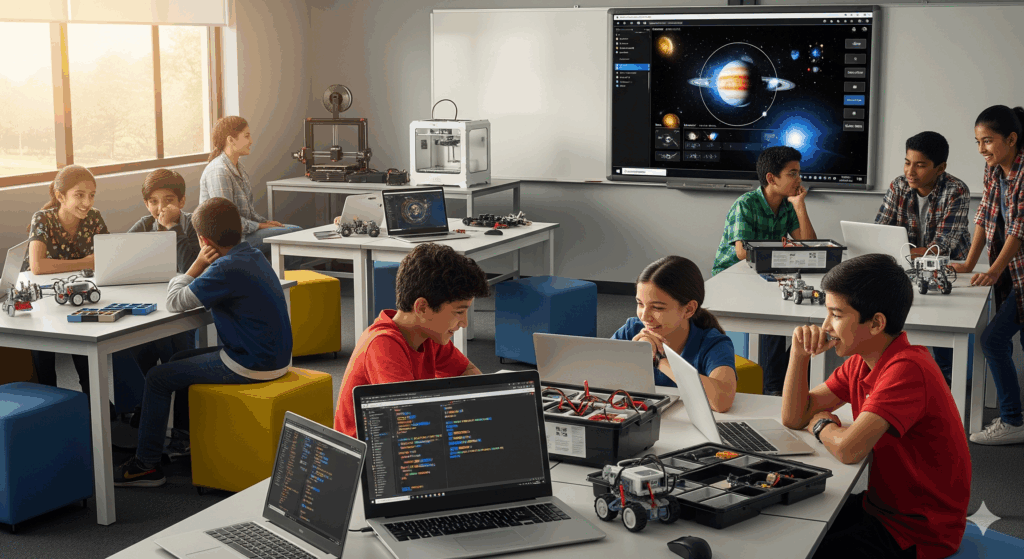
Smart Labs represent a modern evolution in educational spaces, designed to foster hands-on, technology-integrated learning. Unlike traditional labs focused on rote experiments, Smart Labs are dynamic environments where students engage in project-based learning (PBL) across Science, Technology, Engineering, and Mathematics (STEM), often incorporating media arts and digital tools.
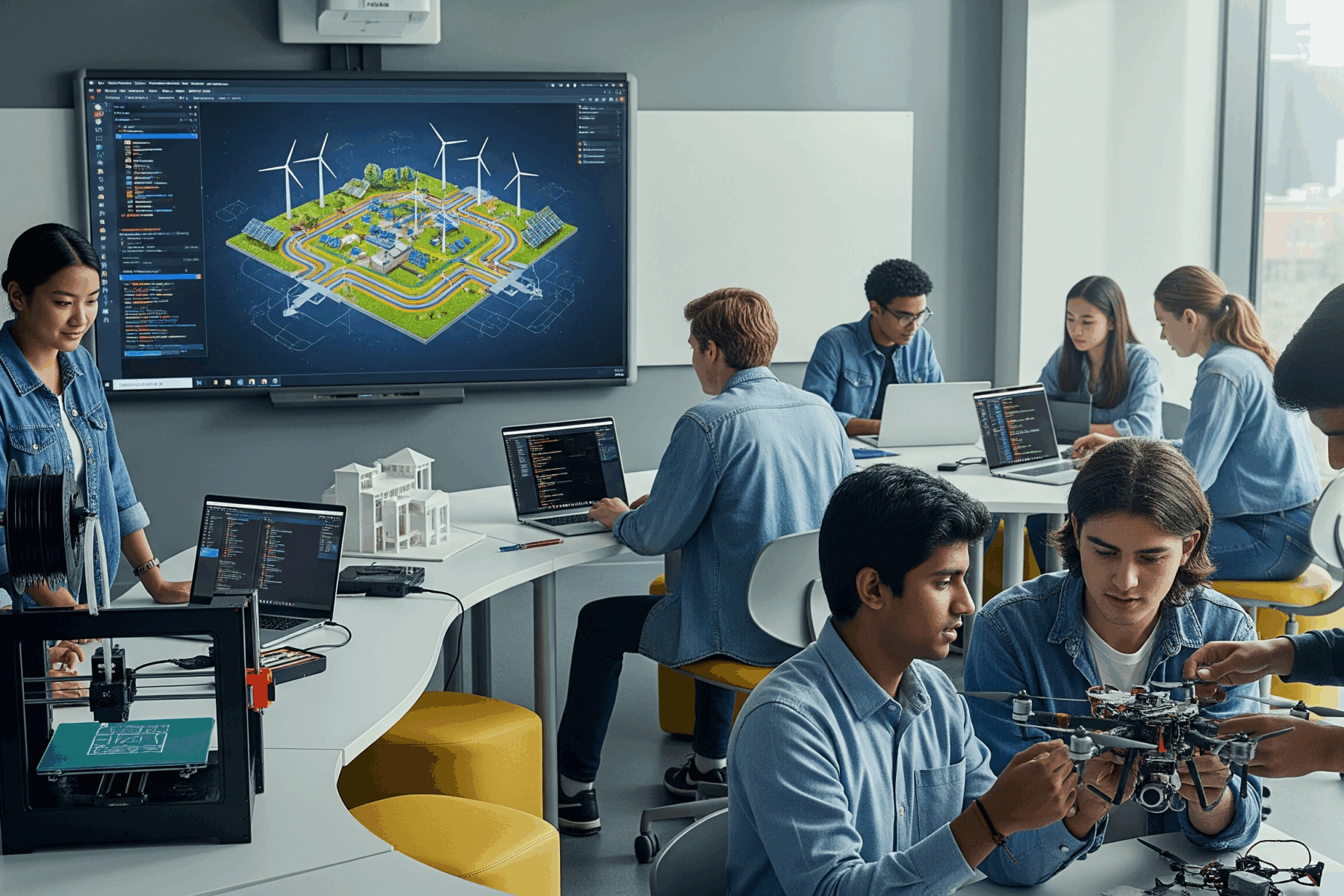
At their core, Smart Labs are fully integrated facilities equipped with applied technologies like robotics kits, 3D printers, coding software, and virtual reality (VR) headsets. They emphasize student-led exploration, where learners tackle real-world challenges, collaborate in teams, and apply concepts from multiple disciplines. For instance, a Smart Lab might have students designing a sustainable city model using circuitry, software programming, and engineering principles—all while documenting their process through digital media.
In the Indian context, Smart Labs align with the vision of holistic education. They go beyond basic ICT labs by creating immersive experiences that encourage creativity and problem-solving. Schools implementing Smart Labs report a shift from passive learning to active innovation, making education more inclusive and engaging for diverse learners.
Smart Labs aren’t just about gadgets; they’re about empowering students to think critically and adapt to change. As global job markets demand future-ready skills, these labs bridge the gap between theory and practice, ensuring students aren’t just knowledgeable but capable.
Key Features of Smart Labs
Smart Labs are distinguished by several key features that make them effective for transforming school curriculum and enhancing student performance. These elements create an environment conducive to deep learning and skill development.
First, project-based learning (PBL) is central. Students work on authentic projects, such as building drones or creating digital animations, which integrate STEM subjects and promote collaboration.
Second, advanced technology integration includes tools like interactive whiteboards, AI-driven software, robotics, and IoT devices. This allows for personalized learning paths, where data analytics track progress and suggest tailored activities.
Third, flexible and ergonomic spaces encourage movement and teamwork. Furniture is modular, with zones for ideation, prototyping, and presentation, ensuring safety and accessibility.
Fourth, formative assessment tools embedded in the lab provide real-time feedback, helping teachers adjust instruction dynamically.
Finally, career connections expose students to industry pathways, from engineering to media arts, fostering future-ready skills like critical thinking and adaptability.
To illustrate, here’s a table summarizing the key features:
| Feature | Description | Benefits to Students and Curriculum |
| Project-Based Learning | Hands-on projects integrating STEM and arts | Enhances engagement and real-world application |
| Technology Tools | Robotics, VR, coding software, 3D printers | Builds digital literacy and innovation |
| Flexible Spaces | Modular furniture, collaborative zones | Promotes teamwork and creativity |
| Data-Driven Assessment | Real-time analytics and feedback systems | Supports personalized learning and performance tracking |
| Career-Focused Curriculum | Links to industries like manufacturing and tech | Prepares for future jobs, transforming curriculum relevance |
These features ensure Smart Labs transform school curriculum from static to dynamic, directly impacting student performance by making learning experiential.
Transforming Curriculum Delivery
Smart Labs fundamentally transform school curriculum delivery by shifting from teacher-centered lectures to student-driven exploration. Traditional curricula often compartmentalize subjects, but Smart Labs integrate them seamlessly, aligning with NEP 2020’s emphasis on multidisciplinary learning.
For example, a biology lesson on ecosystems might evolve into a Smart Lab project where students use sensors to monitor plant growth, analyze data with software, and engineer solutions for environmental issues. This not only deepens understanding but also makes the curriculum more relevant to real-life scenarios.
In terms of delivery, Smart Labs enable flipped classrooms: students research concepts online beforehand, then apply them in lab sessions. This fosters inquiry-based learning, where curiosity drives the process. Teachers become facilitators, guiding rather than dictating, which empowers students and transforms curriculum into a tool for skill-building.
Research shows this approach boosts retention rates by up to 30%, as hands-on activities reinforce theoretical knowledge. In Indian schools, under Samagra Shiksha, Smart Labs are funded to deliver experiential education, ensuring equity across rural and urban areas. By transforming curriculum delivery, Smart Labs make education adaptive, preparing students for a rapidly changing world while elevating overall student performance.
Impact on Student Performance
The impact of Smart Labs on student performance is profound and multifaceted. Studies indicate that students in Smart Lab environments show improved academic outcomes, with higher scores in STEM subjects due to increased engagement.
One key impact is enhanced motivation. Hands-on projects reduce dropout risks by making learning fun—research from various schools reports a 20-40% rise in attendance and participation. Cognitive skills like problem-solving and critical thinking also improve, as students iterate on designs and learn from failures.
Personalized learning paths, powered by data analytics, address individual needs, leading to better performance for struggling learners. For instance, IoT-based Smart Labs allow real-time tracking, resulting in up to 25% gains in test scores, per educational studies.
Social-emotional benefits include better collaboration and confidence, translating to overall student performance. In metrics-driven terms, schools with Smart Labs see elevated graduation rates and preparedness for higher education or careers.
Overall, Smart Labs transform student performance by fostering a growth mindset, where challenges become opportunities for success.
Smart Labs and Indian Education Policy (NEP, Samagra Shiksha)
Smart Labs align perfectly with India’s National Education Policy (NEP) 2020 and Samagra Shiksha scheme, which aim to overhaul school education for equity and innovation.
NEP 2020 emphasizes experiential learning, multidisciplinary approaches, and technology integration—core to Smart Labs. It calls for STEM education from early grades, with Smart Labs providing the infrastructure for PBL and skill development.
Samagra Shiksha, a flagship program, funds ICT initiatives, including over 1.46 lakh smart classrooms and labs nationwide. It supports holistic development, from pre-school to Class 12, by providing grants for hardware and teacher training.
In practice, these policies enable rural schools to adopt Smart Labs, bridging digital divides. For example, NEP’s focus on vocational skills is realized through lab projects linking to industries. By integrating Smart Labs, these policies transform school curriculum into a future-oriented framework, directly boosting student performance across India.
Essential Hardware, Costs, and Infrastructure for Smart Labs
Setting up Smart Labs requires essential hardware, thoughtful infrastructure, and budget planning. Core components include computers/laptops (at least 10-20 per lab), interactive displays, robotics kits (e.g., LEGO Mindstorms), 3D printers, and software for coding and simulation.
Infrastructure needs: Reliable electricity, high-speed internet (minimum 50 Mbps), secure networking, and ventilated spaces of 500-800 sq ft. Safety features like ergonomic furniture and emergency kits are crucial.
Costs vary: A basic Smart Lab might cost ₹5-10 lakhs ($6,000-12,000), including hardware (₹3-6 lakhs), setup (₹1-2 lakhs), and annual maintenance (₹50,000). Under Samagra Shiksha, grants offset expenses.
Here’s a cost breakdown table:
| Component | Estimated Cost (₹) | Description |
| Computers/Tablets | 2-4 lakhs | For student use and data processing |
| Robotics & Sensors | 1-2 lakhs | Hands-on STEM tools |
| Interactive Displays | 1-1.5 lakhs | Smart boards for collaborative teaching |
| Software Licenses | 50,000-1 lakh | Coding, VR, analytics tools |
| Infrastructure (Wiring, Furniture) | 1-2 lakhs | Setup for safety and functionality |
| Total Initial Setup | 5-10 lakhs | Scalable based on school size |
With proper planning, Smart Labs become cost-effective investments, transforming curriculum and student performance.
Step-by-Step Smart Lab Implementation Guide

Implementing Smart Labs requires a structured approach. Here’s a step-by-step guide:
- Assess Needs: Survey stakeholders to identify curriculum gaps and student interests. Align with NEP goals.
- Plan Budget and Resources: Secure funding via Samagra Shiksha; select hardware based on school size.
- Design the Space: Create flexible layouts with zones for collaboration and prototyping.
- Procure and Install: Buy essential tools; ensure infrastructure like internet is ready.
- Train Teachers: Conduct workshops on PBL and tech use.
- Launch Pilot Projects: Start with small groups to test and refine.
- Integrate and Evaluate: Embed in timetable; use data for ongoing improvements.
This guide ensures Smart Labs effectively transform school curriculum and enhance student performance.
Integrating Multiple Lab Types with School Timetable
Integrating Smart Labs with school timetables involves blending them as “specials” or core sessions. For example, allocate 45-60 minute slots 2-3 times weekly, rotating across grades.
Combine with traditional labs: Use Smart Labs for advanced STEM, while science labs handle basics. Timetable example: Mondays for engineering projects, Wednesdays for digital media.
Flexibility is key—use after-school slots for clubs. This integration transforms curriculum by making labs a seamless part of daily learning, boosting student performance through consistent exposure.
Teacher Upskilling and Change Management
Teacher upskilling is vital for Smart Labs success. Programs focus on PBL facilitation, tech tools, and data use, often through 4-day workshops.
Change management involves addressing resistance via communication and support. Involve teachers in planning to build buy-in. Ongoing PD ensures they adapt, transforming their role from lecturers to guides, ultimately elevating student performance.
Data-Driven Assessment and Personalized Learning
Smart Labs leverage data analytics for assessment, tracking progress via dashboards. This enables personalized learning, where algorithms suggest tailored paths.
For example, if a student struggles with coding, the system recommends remedial modules. This data-driven approach transforms curriculum by making it adaptive, improving student performance through targeted interventions.
Empowering Teachers and Fostering Innovation
Smart Labs empower teachers as innovators, providing tools to experiment with lessons. This fosters a culture of creativity, where educators co-design projects, enhancing their professional growth and student outcomes.
Real-World Success Stories
In Phenix City Schools, USA, Smart Labs led to higher STEM engagement, with students exploring robotics and media arts. In India, under Samagra Shiksha, schools like those in Kerala report 25% performance boosts post-implementation.
Tapestry Charter School’s Smart Lab inspired critical thinking, while Crete-Monee districts saw career readiness soar. These stories show how Smart Labs transform curriculum and student performance globally.
Beyond Academics: Building Future-Ready Skills
Smart Labs build skills like collaboration, digital literacy, and adaptability—essential for future jobs. By linking projects to industries, they prepare students beyond exams, transforming education into a pathway for lifelong success.
Challenges and Considerations in Adopting Smart Labs
Challenges include high costs, infrastructure gaps (e.g., rural internet), and teacher training needs. Privacy concerns with data and resistance to change are hurdles.
Solutions: Leverage government funds, phased implementation, and partnerships. Addressing these ensures Smart Labs successfully transform school curriculum and student performance.
Conclusion: Smart Labs as Catalysts for Educational Transformation
Smart Labs are more than spaces—they’re catalysts transforming school curriculum and elevating student performance. From NEP-aligned integration to real-world impacts, they pave the way for innovative education. As we embrace this revolution, let’s invest in Smart Labs to build a brighter future for all learners.